
3 Leadership Lessons Every CEO Needs to Learn Before They Run Out of Gas
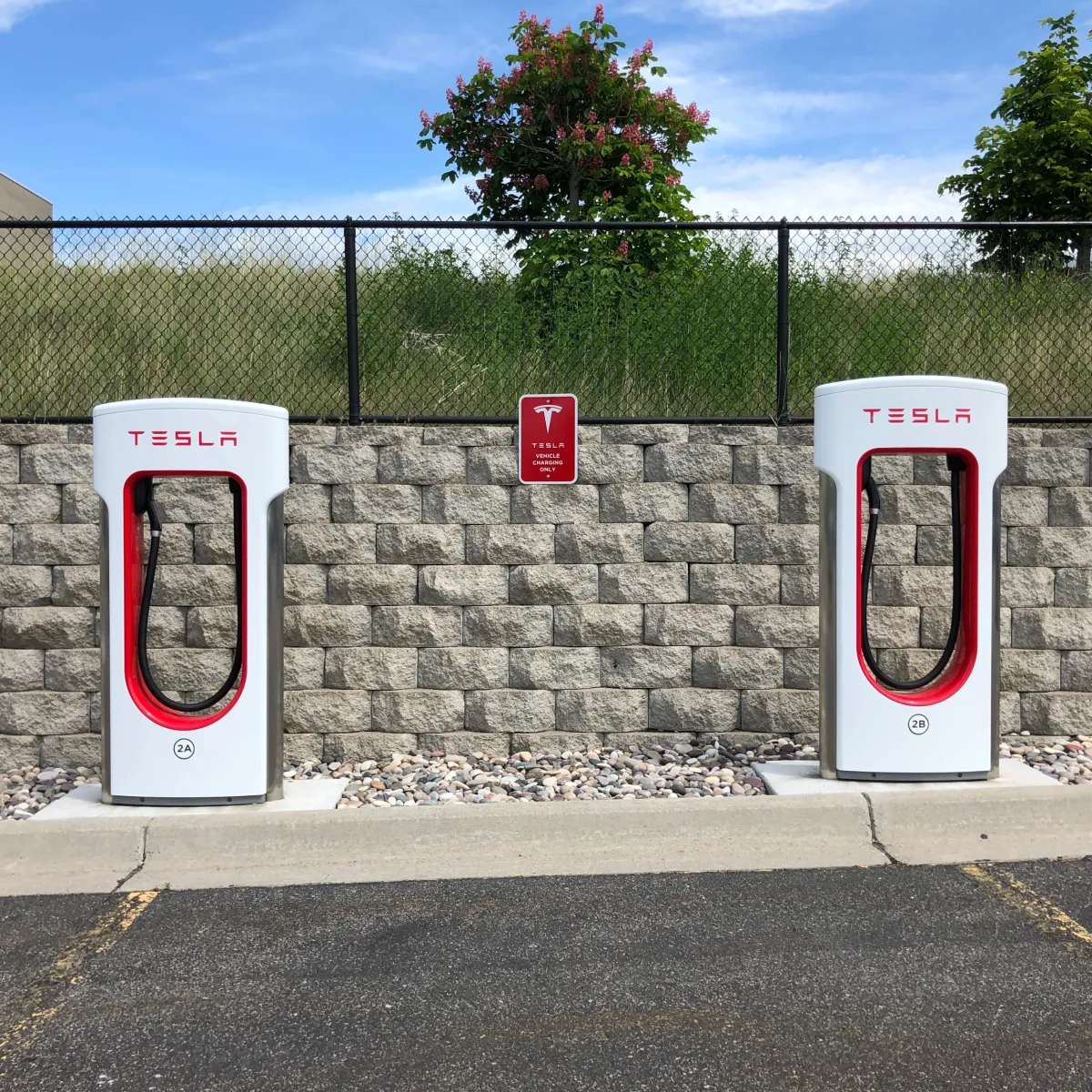
This week, I almost ran out of battery on a Tesla in the middle of an Oklahoma turnpike.
In jeans. In heels. In 98-degree heat. On my way home from speaking at a leadership forum.
There are leadership lessons wrapped up in this story that I just had to share. Did they happen to me so I could teach them? I hope not.
But here we are.
Let me back up.
My husband was out of town for work, which means I got to drive his Tesla. Gas is $4.69 a gallon right now, so yes, I was thrilled.
I was cruising down the H.E. Bailey Turnpike on self-drive, practicing my speech with both hands free, cooled seats on high, AC blasting, navigation running, phone charging. To me, this was truly living.
What I was not doing was checking the battery.
About 10 miles from my exit for the university where I was speaking, I glanced at the screen and saw 17% battery next to my arrival time.
My first thought was that I'd need to charge before I head home. Then I wondered where the nearest charger was, but decided I could deal with it after my speech.
I wasn't going to let a battery situation spiral me out before walking into a room where I was supposed to lead. So I went in, set up, gave the speech, and then dealt with the crisis.
That decision mattered more than I realized at the time.
When I got back to the car and pulled up "charging stations near me," every compatible charger was 34+ miles away. I had an estimated 55 miles of range left.
My husband got on the phone and ran the numbers. He confirmed what the Tesla navigation said– I'd arrive with about 1% battery life.
Then came his explicit instructions.
No AC.
No cooled seats.
No radio.
No phone charging.
Drop below the speed limit.
No self-drive.
So there I was, driving 50 miles per hour in the right lane of an 80 mile per hour highway, windows cracked less than half an inch because open windows create resistance and drain battery, sweating through every layer I had on, doing the math on repeat.
Almost an hour later, I arrived at the charging station with 6% battery and 19 miles of range left.
Here's what that drive taught me.
Energy Management Is the Leadership Skill Nobody Talks About
The reason I ended up in that situation had nothing to do with poor planning. It had everything to do with running every system at full capacity without ever checking the gauge.
Cooled seats. AC. Self-drive. Navigation. Phone charging. All of it, simultaneously, all the way to the destination.
Most leaders operate exactly like this.
Every system running. Calendar packed. Energy going in every direction. And the gauge gets checked only when the warning light comes on.
Energy management is the leadership skill that actually determines how far you go.
Time management tells you what's on the calendar. Energy management tells you whether you have what it takes to show up for it.
The question worth asking before each week, each season, each big push is what's actively draining your battery right now, and what can you afford to turn off?
Panic Is a Resource Drain
When I chose to go into that forum and give my speech instead of spiraling about the battery situation, I made a leadership decision.
Freaking out in the parking lot wouldn't have charged the car. It wouldn't have moved the charging station closer. It would have wrecked my focus before walking into a room full of people who came to hear me lead.
So I tabled it. I handled what was right in front of me. And I dealt with the crisis when the crisis was actually mine to deal with.
At some point on that drive home, something settled in me. There was nothing left to do except drive the speed I was driving, conserve what I could, and trust that I'd either make it or I wouldn't.
Emotional regulation is a strategic skill. The leaders who make it to the destination are the ones who figured out how to conserve their internal resources when external conditions get uncomfortable.
You can feel the fear and still choose where your energy goes.
Your Systems Respond to How You're Operating
When my husband told me I'd arrive with 1% battery, that estimate was based on how I'd been driving the entire trip. Every feature running, heavy usage all the way.
When I changed how I was operating, the estimate changed. I turned things off. I slowed down. I let the car work with me. And I arrived with 6% instead of 1%.
Your business works the same way.
The results you're seeing right now are outputs of how you've been showing up. Revenue, client flow, team culture, growth rate—all of it is responding to your leadership.
Which means when you change how you lead, the projections change too.
When you get clear on your vision, decisions get easier. When you manage your energy, output gets better. When you stop running every system at full capacity and start operating with intention, the business recalibrates.
This is what it means to lead yourself first.
Putting It All Together
Three lessons from one very sweaty turnpike drive.
Your energy is a resource. Manage it like one. Panic burns what you need for the actual work, so choose where your attention goes. And your business is always recalibrating based on how you're showing up, which means the moment you shift, the estimate shifts too.
Here's what I want you to do after you close this tab.
Check your energy bank. Actually check it. What systems have you been running at full capacity without looking at the gauge? What's been draining you that you could turn off, hand off, or let go of entirely?
Then go plug in. Whatever that looks like for you. A morning with no meetings. A weekend that actually feels like a weekend. Time with people who fill you back up. A change of scenery. A slower pace for one season so you can go the distance in the next one.
You don't have to run everything at full capacity to prove you're serious about your business. The leaders who make it to the destination are the ones who figured out how to conserve, recalibrate, and show up with something left in the tank.
Your business responds to how you're operating. Give it a version of you that's actually charged.
The destination is closer than the gauge makes it look.
